PRE-LAUNCH ACCESS: ENDS ON 31.03.2026 | SAVE 70%
STOP ASKING YOUR BACK FOR PERMISSION
If you sit for work at a desk or behind the wheel, this is for you.
The 21-Day Back Capacity Blueprint is a simple, follow-along plan that helps movement feel safe again and builds real sitting and bending tolerance step by step, without guessing.

The 21-Day Back Capacity Blueprint
Daily follow-along sessions built for desk and driving life
A simple Red Day option for flare-ups and sensitive days
Clear progression rules so you don’t do too much too soon
A calm, repeatable plan you can do at your own pace (no falling behind)
SECURE PRE-LAUNCH ACCESS
Normally $499 $149
Pre-launch early access is open until 31.03.2026 and saves you 70%. You’ll get immediate access and support inside the private Founding Member group.

"I stopped saying ‘not today’ to my kids. I can get on the floor, get back up, and not feel like I’ve used myself up for the day" — Luke C.
“I’d been dealing with this for years and thought I’d tried everything. This course explained what was missing and gave me structure I can actually follow.” — Jane S.
"I was the guy with the standing desk, the special cushion, and the ‘perfect posture’ routine. Now I just sit down and get on with my day." - Dominik K.
The Real Cost of Living With Back Issues
It’s not just the discomfort. It’s the mental load, the avoiding, the way life slowly shrinks. Here’s why it can keep coming back, and what’s often been missing
❌
Trap 1
The Capacity Gap
Our workday is an endurance sport our body was never really trainer for. We start the day okay but 'clock out' halfway through because the demand is higher than our current capacity.
❌
Trap 2
The Pain Tax
When we’ve been running on low for a long time, the nervous system starts protecting early and makes normal movement feel like a bigger deal than it should. That’s why small things feel weirdly big, not because you’re broken.
❌
Trap 3
The Passive Loop
Most fixes calm things down for an hour, but they don’t always raise capacity for real life. So we end up renting relief instead of building something that lasts.
Introducing
21-DAY BACK CAPACITY BLUEPRINT
✅
BUILD REAL CAPACITY
We shift from patching symptoms to building real capacity, so your back is less likely to "clock out" halfway through the day. The goal is simple: your back stops trying to do everything alone.
✅
MAKE MOVEMENT FEEL SAFE
We use gentle, progressive work aimed at helping your nervous system feel safer with movement, bringing the “pain tax” down step by step. Less bracing, less guarding, more control over how you move.
✅
COMPOUND PROOF
We don’t chase a miracle; we build a streak. Small wins, stacked daily, turn into trust in your body that you can actually feel.
THE TRUTH ABOUT SITTING CAPACITY
THE STORY
It’s 2:00 PM. Work is still going, but the back has started the slow takeover.
We shift. We slouch. We keep changing position, trying to buy another 10 minutes of comfort. Half the brain is now managing the chair.
And the annoying part is, we didn’t do anything wrong. We were just sitting.
WHAT IT MEANS
Sitting isn’t resting. It’s an endurance demand.
We’re holding the body up against gravity for hours, and when capacity runs low, the back doesn’t “break.” It complains because the tank is empty.
THE COMMON MISTAKE
We blame the chair. We buy the cushion, the fancy setup, the perfect desk.
But that’s support from the outside. The moment we stand up or drive home, it’s just us again.
WHAT WE DO INSTEAD
We stop renting support and start building it from the inside.
Not hardcore workouts. Not hours in the gym. Just specific endurance training so 2:00 PM doesn't feel like such a wall anymore.
THE “PAIN TAX” & THE ALARM RESPONSE
THE STORY
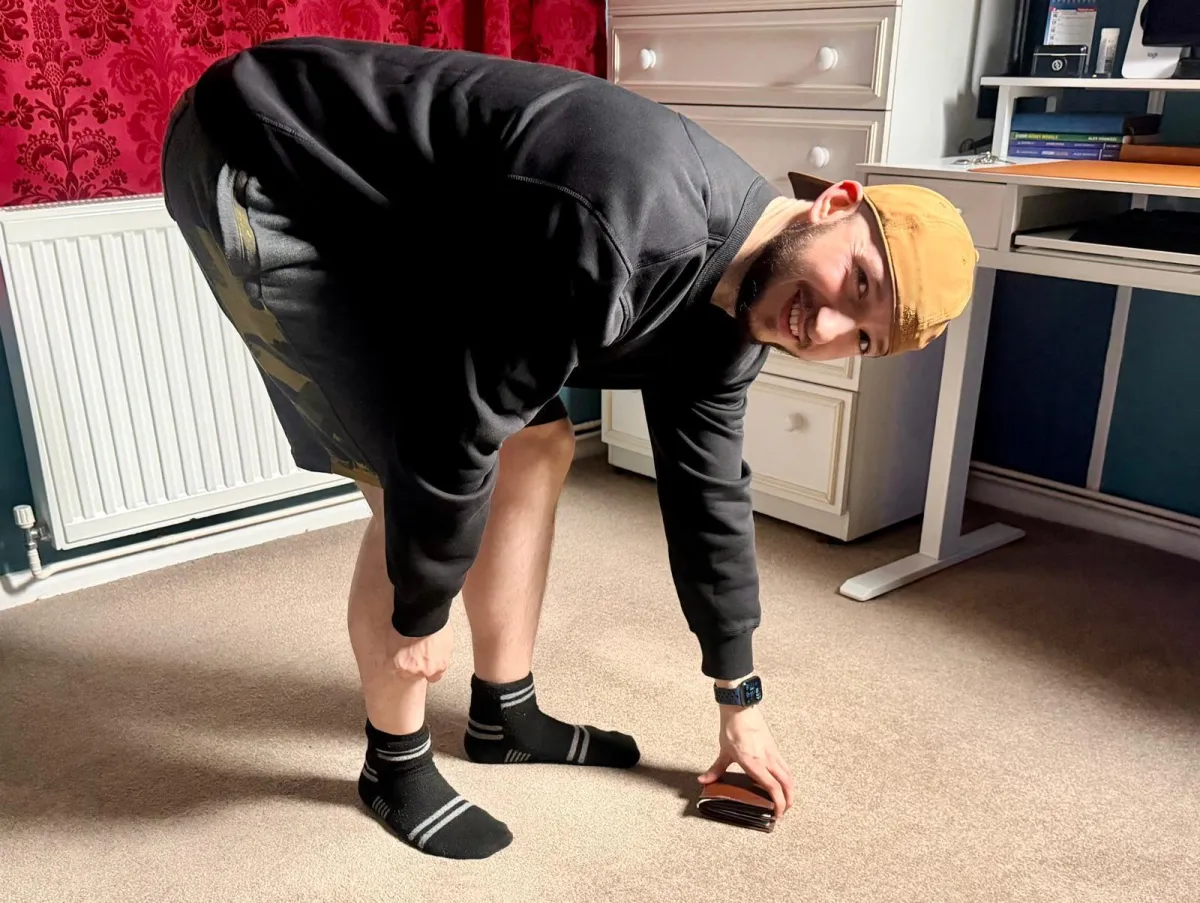
When dropping a pen under the desk becomes a calculation. Instead of just grabbing it, there is a pause. The mental load begins: “Is this going to cause a flare-up?” There is a brace before the movement even happens. Sometimes the back “grabs” just from leaning forward. So, you do the thing you never thought you’d do. You leave the pen there. Like it belongs to the floor now.
WHAT IT MEANS
This is the nervous system getting overprotective. It treats normal movement like a threat and slams the brakes early. That “grab” isn’t proof you’re broken. It’s the body trying to stop a move it doesn’t yet trust.
THE COMMON MISTAKE
We feel tight, so we force a stretch. But that tightness is often guarding, meaning protection. When we force it, the body pushes back harder because it thinks it has to.
WHAT WE DO INSTEAD
We earn safety first. We start with a movement the body already tolerates, then build in small steps. We don’t force the stretch. We gently show the body that it’s safe to let go.
SAFETY CHECK
We never push through sharp pain. If the response spikes, we step back, find the safe level, and build again.
RENTING RELIEF vs TAKING OWNERSHIP
THE STORY
Walking out of an appointment feeling loose is a great feeling. Shoulders drop. There is room to breathe. For a moment, it feels like getting the body back. But the second the car ride home begins, that familiar tension creeps back in. By the time the car pulls into the driveway, the back is already resetting to the old settings. Same stiffness. Same negotiations.
WHAT IT MEANS
Passive help can feel amazing, but it doesn’t change your baseline. It doesn’t build capacity. It’s a temporary lease on relief that expires the moment real life shows up again.
THE COMMON MISTAKE
So we chase the next reset. The next appointment. The next quick fix. But the only thing that changes the baseline is the part nobody can do for us. Consistent, active rebuilding.
WHAT WE DO INSTEAD
We stop relying on luck and start stacking proof. Small active wins you can repeat. Results you can influence at your desk, in your car, and on random Tuesdays. This isn’t “never get help.” This is ownership. We stop depending on rescue and start building more trust in our own body.
The 21-Day Back Capacity Blueprint
Course Curriculum
Everything is home-based. No gym. No fancy equipment.
If you’ve got a floor, a wall, and a chair, you’re in.
Week 1- CLARITY & CONTROL
THE TRANSFORMATION: From Anxious Guesser to Calm Operator
Stop letting your back run your day. We shut down the morning dread and replace guessing with a simple plan you can run on any day.
By Day 7, you’ll stop…
Scanning chairs - you sit where you want, not where you think you “should.”
Negotiating with movement - bend, reach, and move without bracing first.
Waking up unsure - you know exactly what to do, even when your back feels different.
By Day 7, you’ll feel…
Pain becomes less mysterious.
A twinge stops turning into a spiral — because you have a protocol.
More grounded in your body, because you finally trust the plan.
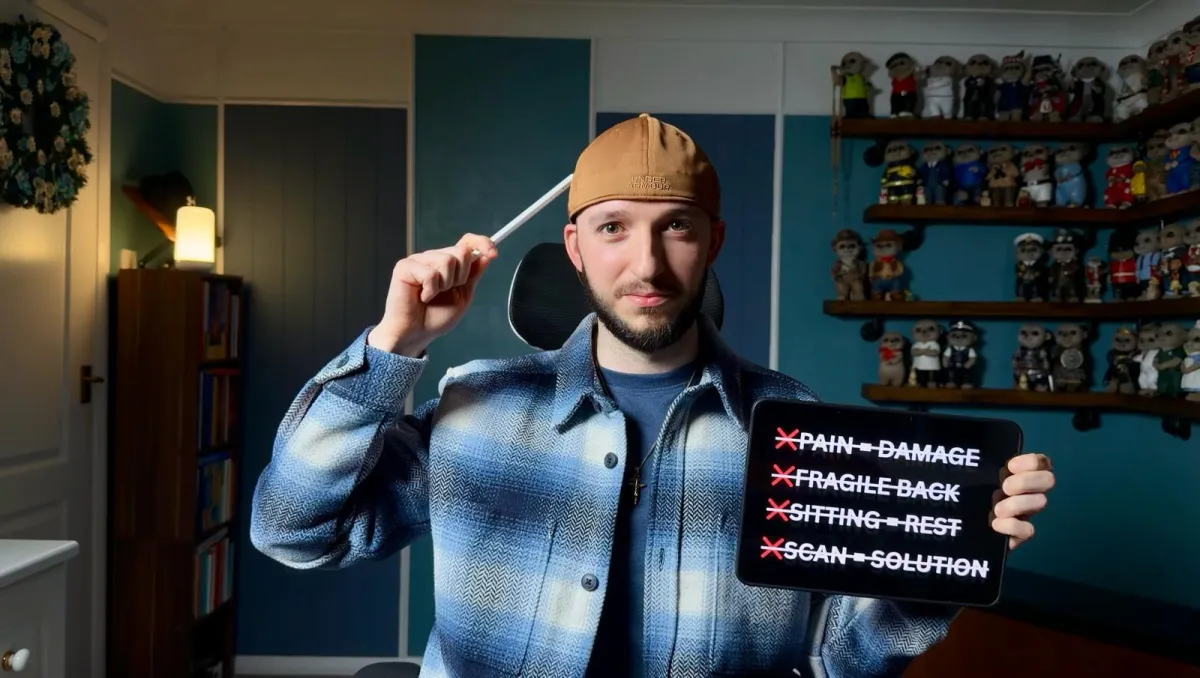
Week 2 - PROOF & CAPACITY
THE TRANSFORMATION: From Fragile & Careful to Resilient & Capable
Week 2 is where safety stops being a theory and becomes something you can feel in real life, at your desk, behind the wheel, and at home. You stop treating your back like it’s made of glass… because you start building proof.
In Week 2, we install 3 things:
Your “How Much Is Enough” Rule
You learn the line before you cross it, so progress can stacks instead of setbacks stacking.Your Workday Break Pattern
A simple way to split up sitting life so your back isn’t carrying the whole day in one long block.Your Capacity Builder
You start training the support system that sitting switches off, so your back stops doing overtime.
By the end of Week 2:
You may finish more workdays without feeling wrecked.
Meetings feel less like a slow build of stiffness hour by hour.
Good days are less likely to turn into setbacks, because you know when to stop, and what to do next.
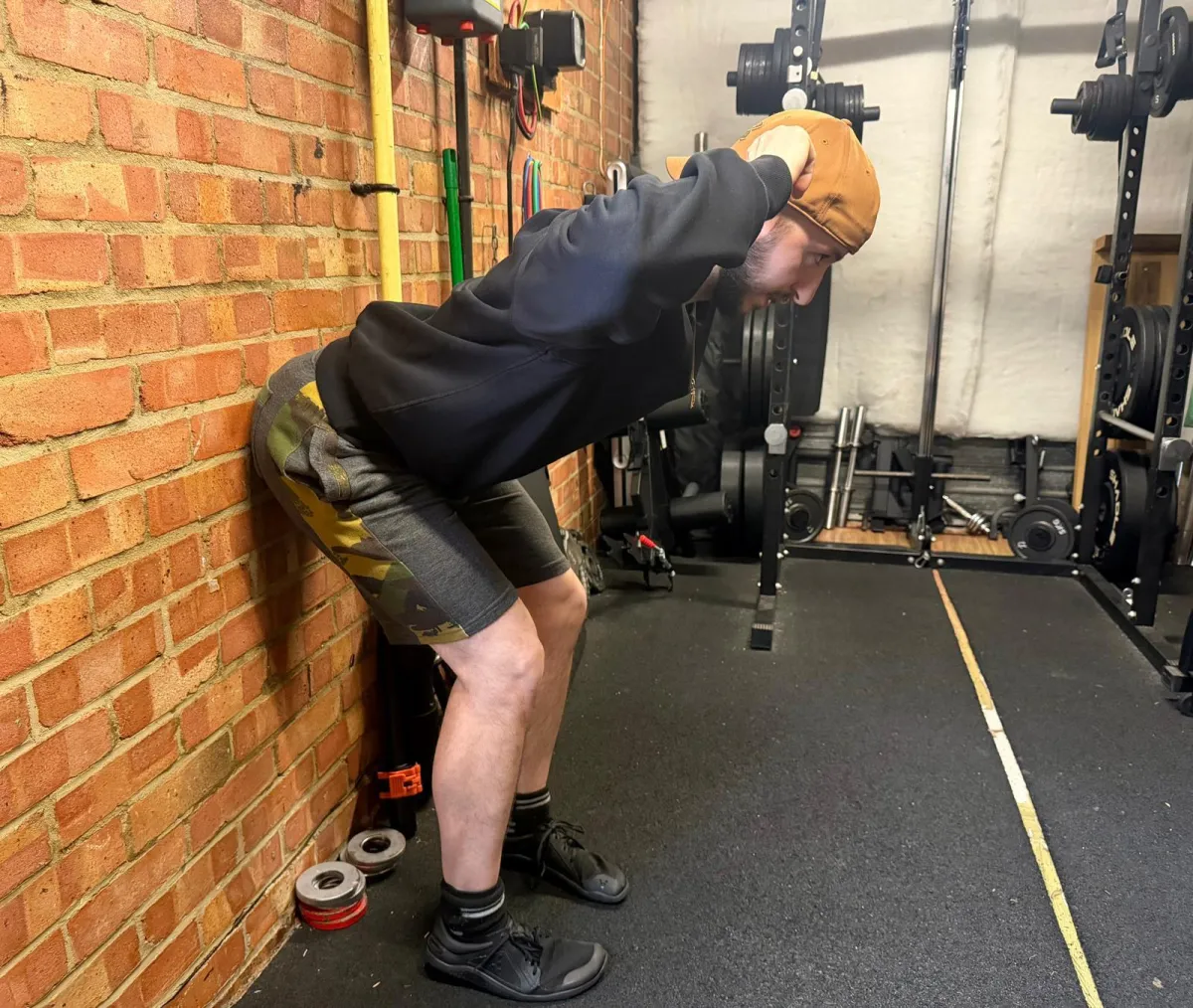
Week 3 - OWNERSHIP & MASTERY
THE TRANSFORMATION: From Managing Back Pain to Owning Your Body
Week 3 is where we stop managing symptoms and start owning the system. You stop living like you need permission to move… because you know how to lead your body through real life.
In Week 3, we install 3 things:
Your “Rough Day = Data” Rule
One rough day no longer rewrites the whole story. You learn how to read it, respond, and keep momentum.Your Real-Life Game Plan
Stress, travel, busy weeks, bad sleep, life happens. You learn how to adjust without spiraling or starting over.Your Confidence Loop
You stack repeatable wins until “fragile” is less likely to be your identity, and normal movement feels normal again.
By the end of Week 3:
You begin to trust your body to handle real life, even when life is messy.
A rough day becomes a small speedbump, not a total reset.
You may stop thinking about your back all day… and start getting your life back.
HERE IS WHAT YOU GET TODAY
The 21-Day Back Capacity Blueprint (Core System)
The step-by-step plan built for people who sit for work, at a desk or behind the wheel. We rebuild real capacity, reducing the mental load, and teach the body how to handle a full day more comfortably without “clocking out.”
Core Value: $499
Here Is Exactly What You Get Inside the Core System
📦 1. The 21-Day Step-by-Step Video Curriculum
No more guessing or piecing together random YouTube stretches. You get 21 days of short, actionable, follow-along videos. You'll know exactly what to do, how to do it, and how to know if you are doing it right.
The Value: Absolute clarity and structure
🏛️ 2. The "Capacity Building" Framework
This isn't about stretching; it's about endurance. You are getting the exact progressive loading system designed to help your lower back better handle a full 8-hour workday without tapping out at 2:00 PM.
The Value: A body that actually holds up at work
🛋️ 3. The "No-Gym" Living Room Setup
Everything is designed for your real life. There are no mandatory gym memberships, no heavy barbell lifts, and no expensive gadgets to buy. If you have a floor, a wall, and a chair, you have the exact environment you need to rebuild your back.
The Value: Zero friction, total convenience
♾️ 4. Lifetime Access (No Expiration Dates)
Your access never expires. You can start, pause, and return to the Blueprint whenever life gets in the way. You buy it once, and you own the system forever.
The Value: Zero pressure to "keep up"
🎁 THE FOUNDING MEMBER BONUSES
Because you are joining during the
Pre-Launch, you get all of this for free.
🎁 BONUS #1: The “Red Day” Reset Protocol
When your back flares or everything feels amplified, you don’t panic and disappear for two weeks. You open this, run a simple nervous-system reset sequence, and get control back fast so one bad moment is less likely to hijack your week.
Value: $197
🎁 BONUS #2: The Weak Link Library (Ground-Up & Top-Down)
Most back pain is a teamwork problem. This library shows you exactly how to wake up the support system that sitting shuts down (feet, ankles, hips, and upper body) so your lower back doesn't have to work so hard.
Value: $297
🎁 BONUS #3: The “Pain-Free Identity” Masterclass
This is the part nobody teaches. We break the fear loop, rebuild your self-trust, and stack proof so movement feels more normal again, not something you have to “psych yourself up” for. Stop living like you're fragile.
Value: $197
🎁 BONUS #4: The Rewire Toolbox (12 Print-Ready Tools)
Your “what do I do right now?” kit for real life. Simple, printable tools for workdays, commutes, and flare moments that replace guessing with a plan. Stop Googling your symptoms at 2:00 AM and start leading your own recovery.
Value: $99
🎁 BONUS #5: Founding Member Community Access (Direct Support + Momentum)
Doing this alone is where most people fall off. Inside our private Founding Member group, you get direct support, feedback, and momentum from other desk workers and drivers rebuilding right alongside you.
Value: $197
🎁 BONUS #6: Early Access Feedback Pass (Help Shape the Next Version)
Founding Members don’t just buy the course; they build it with me. You get behind-the-scenes updates, priority input on upgrades, and early access to improvements future students won’t influence.
Value: $397
YOUR TOTAL TODAY
Total Value: $1,883
Standard Price: $499
Founding Member Price Today: $149
Meet Your Instructor
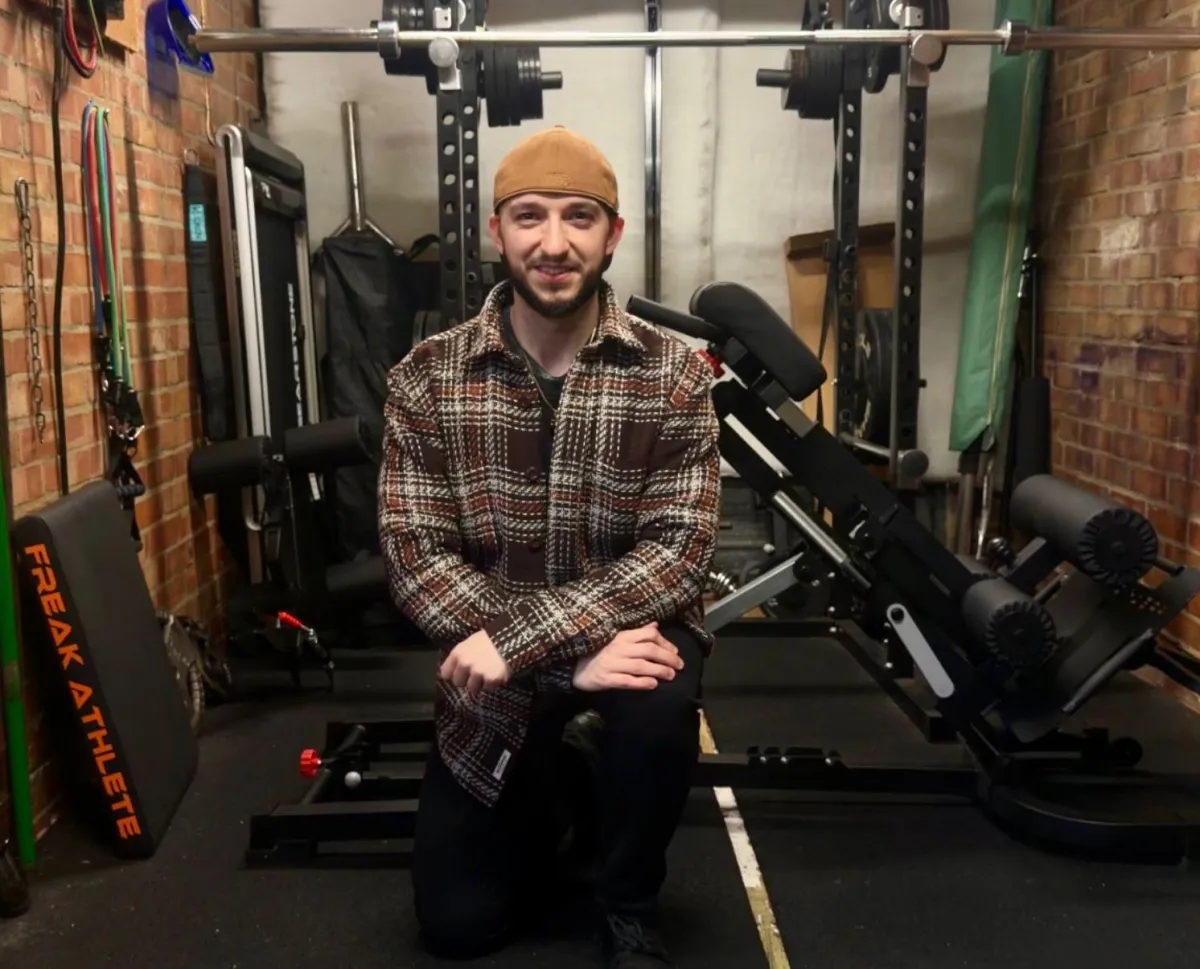
Eight years of pain taught me one thing: avoidance doesn’t fix your back
My name is Marcel.
For most of my life, I had one dream: join the Marines. I moved countries for it. I learned a new language for it. I trained like a machine for it.
And then one second took it all. One bad squat didn’t just hurt my back. It cancelled the future I was building.
The scan came back “clean.” They called it “non-specific back pain.” And I got the advice so many people get:
“Just rest.”
If you’ve lived this, you already know the punchline. Rest doesn’t give you your life back. It gives you fear.
That advice cost me years. Eight years, if I’m honest.
Because once fear moves in, it spreads. You start treating your back like it’s made of glass. You brace before you even move. You walk like you’re carrying something fragile, even when your hands are empty.
You start doing the routines:
Lying still in the morning to check what kind of day it is.
Planning around chairs.
Avoiding the floor.
Doing the mental maths before simple things.
And real life doesn’t pause while you “rest.” Work still needs doing. Commuting still happens. Life asks for the same moves every day.
So, I did what most people do, I chased relief. Massages. Cushions. Chairs. Quick fixes. They’d help for a moment… and then life would happen again, and I’d be right back where I started.
I kept asking the question that matters:
If the scan is clean, why does it still feel unsafe to move?
Here’s what I didn’t understand back then: I wasn’t stuck because I was broken. I was stuck because my body didn’t have the capacity for the life I was living… and my nervous system didn’t trust the movement needed to rebuild it.
I lived in the middle. Too stiff to do nothing. Too sensitive to do much. Good days turned into “catch up days.” Then I’d wake up sore and think, “There it is. I knew it.”
That’s when I changed the approach. No hero moments. No gambling on random fixes. Just simple, repeatable proof.
The kind of proof you feel on a random Tuesday. When you sit through something and you’re not counting the minutes. When you stand up and you don’t need a warm-up ritual. When you move first… and think about it second.
That’s why I built the 21-Day Back Capacity Blueprint.
So, you stop guessing, stop shrinking your life… and your back doesn't have to feel like the boss.
If any part of this feels familiar, you’re not alone, and you’re not stuck.
If you’re ready to stop renting relief and start building what you own, click below.
Who Is This Course For?
We didn’t build this for everyone. We built this for a very specific person. If you find yourself nodding your head, you're in the right place.
You sit for a living: Your job demands hours at a desk or behind the wheel. You can’t just "avoid sitting" because sitting is the job. You might feel fine in the morning, but by 3:00 PM, your back feels tapped out.
Designed for 'Background Noise: This is for situations where the threat of stiffness is always lingering in the background. When bracing the core before bending over becomes an automatic habit. It is built for the person who automatically mentally scans a room for the "good chair," and has to plan their weekend around what the body will tolerate.
You are done "Renting Relief": You’ve tried the massage guns, the heat packs, the cracking, and "that one stretch" from YouTube. They work for an hour... and then the discomfort comes right back. You are tired of managing the symptoms and want to work on the root cause.
Bottom line: If you are functioning... but you are paying for it... we built this for you.
What Categories Do We Focus On?
We don’t chase random tips or temporary relief. We work on the entire foundation underneath the pain.
Identity & Self-Trust: Back pain changes who you are. You start letting your back dictate your life, planning, bracing, and negotiating every movement. We rebuild your self-trust through repeatable physical wins until "careful" is less likely to be your default personality.
Pain Education: You aren't just scared of the pain; you're scared of what it means. We demystify the signals, drawing a hard line between normal sensitivity and actual danger. When your brain understands what is really going on, movement stops feeling like a threat.
The Daily Rebuild: If you sit for a living, you don't need another posture tip, you need physical capacity. We rebuild your body from the ground up so your lower back stops doing all the work. This is how you may stop tapping out halfway through the workday.
Mobility & Release: Sitting makes you stiff, but static stretches vanish by tomorrow. We train strength through your full range of motion, meaning the mobility you earn more likely to stay. Less pressure on the back. More freedom in real life.
Who Is This Course NOT For?
Let’s be upfront to respect your time. This program is not the right fit if:
You are looking for a 5-minute miracle: We don’t do magic tricks or "one weird stretch." This is a rebuild program. You need to be willing to invest 20–30 minutes a day to actively train your body and get your capacity back.
You are committed to resting: If your strategy is to avoid movement, stay guarded, and just "wait it out," this system won't work for you. We address the problem through smart, progressive movement.
Your pain is from a fresh, acute trauma: If your back pain started this week from a severe fall, a car crash, or a major accident, please get cleared by a doctor first. We rebuild chronic, lingering problems, not fresh medical emergencies.
You have medical "Red Flags": Stop reading and seek urgent medical attention if your back pain is accompanied by: numbness in the groin/saddle area, loss of bladder or bowel control, unexplained weight loss, or a fever.
STILL NOT SURE?
Frequently Asked Questions
Everything you’re probably thinking answered clearly
Question 1: I’ve had persistent back discomfort or long-running stiffness. Is this safe?
For most people, yes. When discomfort has been around a while, the body can get protective and normal movements start feeling “high stakes.” This isn’t a “push through it” plan. It’s a controlled, step‑by‑step rebuild where we start at a level that feels manageable and build from there.
Important: This is educational, not medical advice. If there’s recent trauma, unexplained symptoms, or anything that feels severe or worsening, get checked by a qualified healthcare professional first.
Question 2: Why will this work when other methods haven't?
Because random fixes aren’t a plan. A mix of stretches, appointments, gadgets, and hope can feel busy… without building lasting change. The Blueprint helps because it stops chasing symptoms and starts rebuilding real‑life capacity with a simple structure. Less guessing. More repeatable progress.
Question 3: How much time and equipment do I need?
20–30 minutes a day. And because real life is messy, it can be split: 15 minutes in the morning, 15 minutes later. No gym needed. A floor, a wall, and a chair are enough to start.
Question 4: What if there’s a setback or a rough day during the program?
Rough days happen. They’re part of the process, not proof anything is broken. On those days, we switch to the Reset Protocol to calm things down, then pick up again when it feels steady. One bad morning doesn’t get to steal the week.
Question 5: How long is access & when does it start?
As a Founding Member, the first step is joining the private Community today. The official 21‑Day Blueprint starts at the end of March 2026. Once it drops, it includes Lifetime Access. No expiry date. You can start, pause, and return anytime.
Question 6: Why listen to me?
I’m not a doctor. I’m someone who lived this for eight years, the flare‑ups, the fear, the guessing, the “what did I do wrong?” I tested what actually held up in real life, then compressed the lessons into 21 days so we can start getting life back without losing years like I did.

The 14-Day Real-Life Guarantee
I know you’re skeptical. You’ve probably spent a fortune on appointments, massages, and gadgets that gave you a short window of relief… then things went back to how they were.
I’m not letting you pay for another “maybe.”
Join the Blueprint and test it for 14 days in the places your back actually lives: at your desk, in the car, and in your living room.
Run the first two weeks of the system. Use the Reset Protocol when you need it. Take the tools into your workday.
If you don’t feel a meaningful shift, more clarity, more control, and less of that exhausting “mental load” before normal movement, email me and I’ll refund you. Every penny. No questions. No guilt.